Lidder River: The Forgotten Ancient Trade Route That Connected Kashmir to the Himalayas .
Lidder River: The Forgotten Ancient Trade Route That Connected Kashmir to the Himalayas
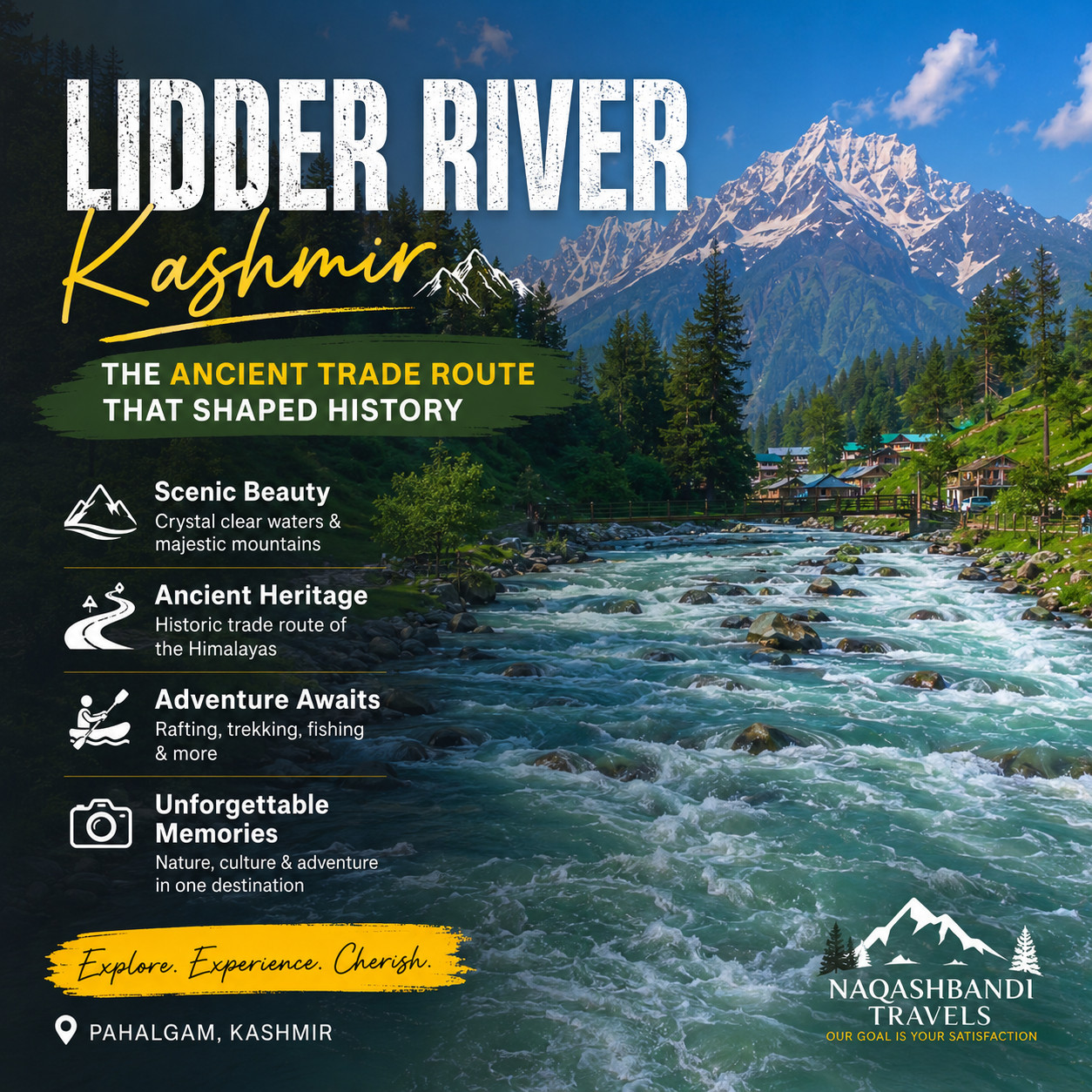
Most travelers know the Lidder River for its emerald-green waters rushing through Pahalgam, the sound of rapids echoing between pine forests, and the snow-capped peaks reflected in its crystal-clear current. Families stop beside the river for picnics, anglers arrive in search of trout, and adventure seekers come for white-water rafting. Yet beneath this peaceful landscape lies a story that stretches back centuries.
Long before highways linked Kashmir to the rest of India, mountain valleys served as the region’s lifelines. Among them, the Lidder Valley provided a natural passage into the high Himalayas. Shepherds, merchants, pilgrims, and explorers followed these routes season after season, carrying goods, ideas, and traditions that helped shape the culture of Kashmir.
Today, traces of that history remain hidden in the landscape. Every bend in the river, every mountain trail, and every alpine meadow tells part of the story of a valley that once connected distant communities across some of the world’s highest mountains.
Where Does the Lidder River Begin?
The Lidder River begins high in the Himalayas, fed primarily by the Kolahoi Glacier, often called the “Matterhorn of Kashmir.” Meltwater from the glacier forms streams that merge into a fast-flowing river before descending into the Lidder Valley.
The river flows for approximately 73 kilometres through forests, villages, and mountain meadows before joining the Jhelum River near Khanabal in Anantnag district.
Its icy waters sustain orchards, rice fields, trout habitats, and countless villages, making it one of southern Kashmir’s most important rivers.
Why the Lidder Valley Became an Ancient Mountain Route
Mountain rivers often create the easiest natural corridors through rugged terrain. The Lidder Valley is a good example. While the surrounding peaks rise dramatically, the valley itself offers a relatively accessible path deeper into the Himalayas.
For centuries, Gujjar and Bakarwal pastoral communities moved livestock through these meadows during seasonal migrations. Pilgrims travelling toward the Amarnath Cave also passed through parts of the valley.
Historical evidence suggests that Himalayan routes connected through this region facilitated regional trade and movement between Kashmir and neighbouring mountain areas. Merchants transported valuable goods wherever mountain passes were open, though the exact routes varied with season and political conditions.
Instead of imagining a single paved road, it is more accurate to picture a network of seasonal trails shaped by geography, weather, and local knowledge.
Goods That Passed Through the Mountains
Travel across the Himalayas was difficult, but profitable. Merchants carried lightweight, high-value products that justified the demanding journey.
Some of the items exchanged included:
- Pashmina wool
- Salt from high-altitude regions
- Dried fruits
- Medicinal herbs
- Spices
- Handcrafted wooden items
- Shawls
- Woollen textiles
- Horses and pack animals
- Precious stones in limited quantities
Trade also encouraged the exchange of languages, customs, food traditions, and craftsmanship that enriched Kashmir’s cultural heritage.
Pahalgam: A Settlement Shaped by the River
Today, Pahalgam is one of Kashmir’s best-known tourist destinations, but its location was important long before tourism.
Situated where mountain routes converge, Pahalgam provided fresh water, grazing land, forests, and relatively open terrain for temporary camps. Travellers moving through the valley naturally stopped here to rest before continuing their journey into higher elevations.
The town’s popularity today reflects the same geographical advantages that attracted people centuries ago.
The River That Sustains Life
The Lidder River is far more than a scenic attraction.
Its water supports:
- Irrigation for agriculture
- Apple orchards
- Walnut trees
- Rice cultivation
- Trout fisheries
- Local drinking water supplies
- Tourism businesses
- Hydrological balance within the valley
Healthy rivers support healthy communities, and the Lidder continues to play that role today.
Adventure Along the Lidder River
Modern visitors experience the river very differently from ancient traders.
Instead of pack animals, you’ll find inflatable rafts navigating exciting rapids. Instead of merchants, photographers wait patiently beside the riverbank to capture golden evening light reflecting from the water.
Popular activities include:
White-Water Rafting
The Lidder River offers exciting rafting stretches suitable for beginners as well as experienced adventure enthusiasts, depending on seasonal water levels.
Trout Fishing
The cold, oxygen-rich water supports brown and rainbow trout, making the region popular among licensed anglers.
Camping
Several riverside camps provide opportunities to spend peaceful nights surrounded by pine forests and mountain air.
Trekking
The valley serves as the starting point for numerous Himalayan treks, including routes towards:
- Aru Valley
- Tarsar Lake
- Marsar Lake
- Kolahoi Glacier
These trails reveal alpine meadows, wildflowers, glacial streams, and breathtaking mountain scenery.
Wildlife of the Lidder Valley
The forests surrounding the river support remarkable biodiversity.
Visitors may encounter:
- Himalayan Black Bear
- Himalayan Musk Deer
- Red Fox
- Himalayan Monal
- Koklass Pheasant
- Golden Eagle
- Brown Trout
- Numerous alpine bird species
Responsible tourism helps protect these fragile ecosystems.
Best Time to Visit the Lidder River
Every season transforms the valley.
Spring (March to May)
Melting snow feeds the river while flowers begin covering nearby meadows. Temperatures remain pleasant, making sightseeing enjoyable.
Summer (June to August)
This is the busiest season for tourism. Rafting, trekking, fishing, camping, and family holidays all reach their peak.
Autumn (September to October)
Golden poplar trees, crisp mountain air, and clear skies create spectacular photography opportunities.
Winter (November to February)
Snow blankets the valley, transforming Pahalgam into a peaceful winter destination. Many visitors simply come to enjoy the quiet beauty of the season.
Nearby Attractions
A visit to the Lidder River is best combined with several nearby destinations.
Betaab Valley
Named after the famous Bollywood film Betaab, this lush valley is known for green meadows, flowing streams, and dramatic mountain views.
Aru Valley
A peaceful village surrounded by alpine landscapes and the starting point for several popular trekking routes.
Chandanwari
Located around 16 kilometres from Pahalgam, Chandanwari marks the traditional starting point of the annual Amarnath Yatra.
Baisaran
Often called the “Mini Switzerland of Kashmir,” Baisaran offers panoramic views, rolling grasslands, and horse rides.
The Spiritual Importance of the Valley
The Lidder Valley is deeply connected with the annual Amarnath pilgrimage.
Every year, thousands of pilgrims travel through Chandanwari and the surrounding mountains on their journey toward the sacred Amarnath Cave. During the pilgrimage season, the valley comes alive with temporary camps, security arrangements, and support services that reflect the region’s long tradition of hospitality.
Conservation Matters
Tourism brings opportunities, but it also creates responsibilities.
Visitors can help protect the Lidder River by:
- Carrying reusable water bottles.
- Avoiding plastic waste.
- Respecting local customs.
- Staying on marked trekking trails.
- Supporting local guides and businesses.
- Avoiding disturbance to wildlife.
- Leaving campsites cleaner than they found them.
Simple actions help preserve the valley for future generations.
Photography Tips
If you’re hoping to capture the beauty of the Lidder River, consider these suggestions:
- Visit early in the morning for soft light.
- Shoot during autumn for colourful landscapes.
- Use a tripod for long-exposure river photographs.
- Include pine forests and mountains to add depth.
- Explore quieter stretches beyond the main tourist areas.
Frequently Asked Questions
Is the Lidder River safe for tourists?
Yes. Popular tourist areas around Pahalgam are generally safe to visit. However, always follow local advice, especially during periods of heavy rainfall or high water flow.
Can visitors go rafting?
Yes. White-water rafting is available during suitable seasons through authorised operators.
Is fishing allowed?
Fishing is permitted in designated areas with the appropriate permissions and licences.
How far is Pahalgam from Srinagar?
Pahalgam is approximately 90 kilometres from Srinagar and is usually reached in about two to three hours by road, depending on traffic and weather.
Which glacier feeds the Lidder River?
The river is primarily fed by meltwater from the Kolahoi Glacier and surrounding snowfields.
Final Thoughts
The Lidder River is more than a scenic destination—it is a thread woven through Kashmir’s history, geography, and culture. From sustaining mountain communities and supporting seasonal movement across the Himalayas to becoming one of the Valley’s most loved tourist attractions, it has quietly shaped life in this region for generations.
Whether you come for rafting, trout fishing, trekking, photography, or simply to listen to the sound of the river beneath towering pines, the Lidder Valley offers an experience that goes beyond sightseeing. It invites you to slow down, appreciate nature, and discover the stories hidden within Kashmir’s landscapes.
If you’re planning a journey to Kashmir, don’t just visit the Lidder River—take the time to understand it. Its waters have carried far more than snowmelt; they have carried the history of a valley that continues to inspire everyone who visits.
- Lidder Valley
- Pahalgam River
- Pahalgam Travel Guide
- Kolahoi Glacier
- Kashmir Tourism
- Things to do in Pahalgam
- Ancient Trade Route Kashmir
- Lidder River History
- Kashmir Adventure Tourism
- Best Time to Visit Pahalgam